
A health worker hands out COVID-19 prevention information in Balykchy.
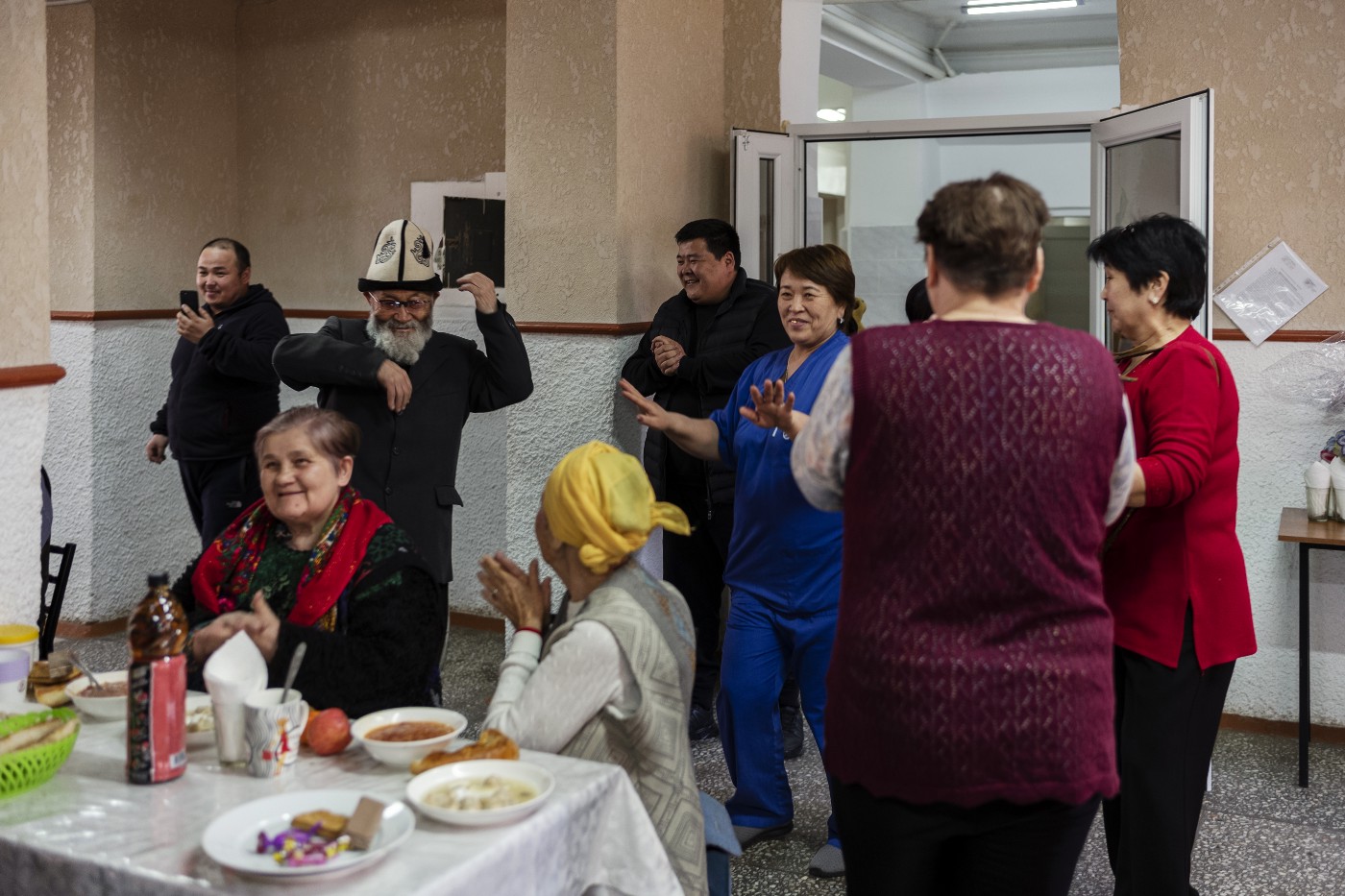
Knowing that communities are key actors in health emergencies and that the needs of older people deserve special attention, WHO/Europe partnered with the civil society organization Resource Centre for the Elderly. They support organizations such as the care centre in Balykchy, which offers older people like Valentina a lifeline.
“The Centre kept in touch with us elderly people — calling, taking care of us, offering vaccinations. Doctors visited to check our eyes and now I wear glasses,” Valentina explains.
“The centre in Balykchy provided us with vaccination and masks, and this might be the reason why I did not get sick,” says Ekaterina Zinchenko, 95.
With support from WHO, the Resource Centre provided 3600 older people with masks, medical devices and free counselling services. Those with disabilities have been supported to access health-care facilities, offered safe social contact and tips on COVID-19 protection, and given checks for blood pressure, diabetes and eyesight. The Centre also taught participants online skills and established a council of paramedics that tapped into the experience of retired health workers.
Residents play chess at a social centre in Bishkek.
Valentina continues to rely on the Centre for her health and well-being. “WHO visited, bringing devices to measure our oxygen, blood pressure and temperature. At the Centre, children put on concerts. It gives us inspiration — it makes me feel my life is important.”
The centre in Balykchy also offers members tips on healthy ageing. Kudaibergen Balgeldiev, aged 76, has become determined to maintain his health. “I wake up early in the morning and go to the lake to exercise there. The centre provides encouragement. We share advice about how to live and enjoy better health,” he says.
Physical therapy at a social centre in Bishkek.
At a social centre for older people in Bishkek, residents are not only encouraged to get the COVID-19 vaccine but also to maintain their physical and mental health. They can read in the library, engage in physical activity, and participate in physical therapy.
“At the beginning of the [COVID-19] pandemic older people were very worried. Communication with their relatives was cut off. There was a lot of distress. Physiotherapy helped them start to feel better, they came alive and started socializing again,” says Irina Pobejimova, a physiotherapist at the centre in Bishkek.
A former architect drafts house plans in the leisure room at a social centre in Bishkek.
“The pandemic caused a lot of damage and affected all kinds of activities that we offer,” says Erkingul Kurmanalieva, Director of a social centre in Bishkek that also participated in the initiative.
“But I would say that we maintained the dignity of our members thanks to the support of the Government and organizations such as WHO.”
A patient receives care from a health worker at a social center in Bishkek.
Gerald Rockenschaub, Regional Emergency Director at WHO/Europe, confirms that supporting communities to mobilize their own resources to protect the most vulnerable is critical, especially in the early stages of an emergency.
“We work with communities in emergencies because they are the ones who have the eyes and ears on the ground. They are there, they know best what needs to be done, and they are the first to be affected by any particular crisis.”
Gerald adds, “Communities can mobilize their resources and protect their members best in the early stages of a crisis until the international community and the government can mobilize additional resources to support them.”